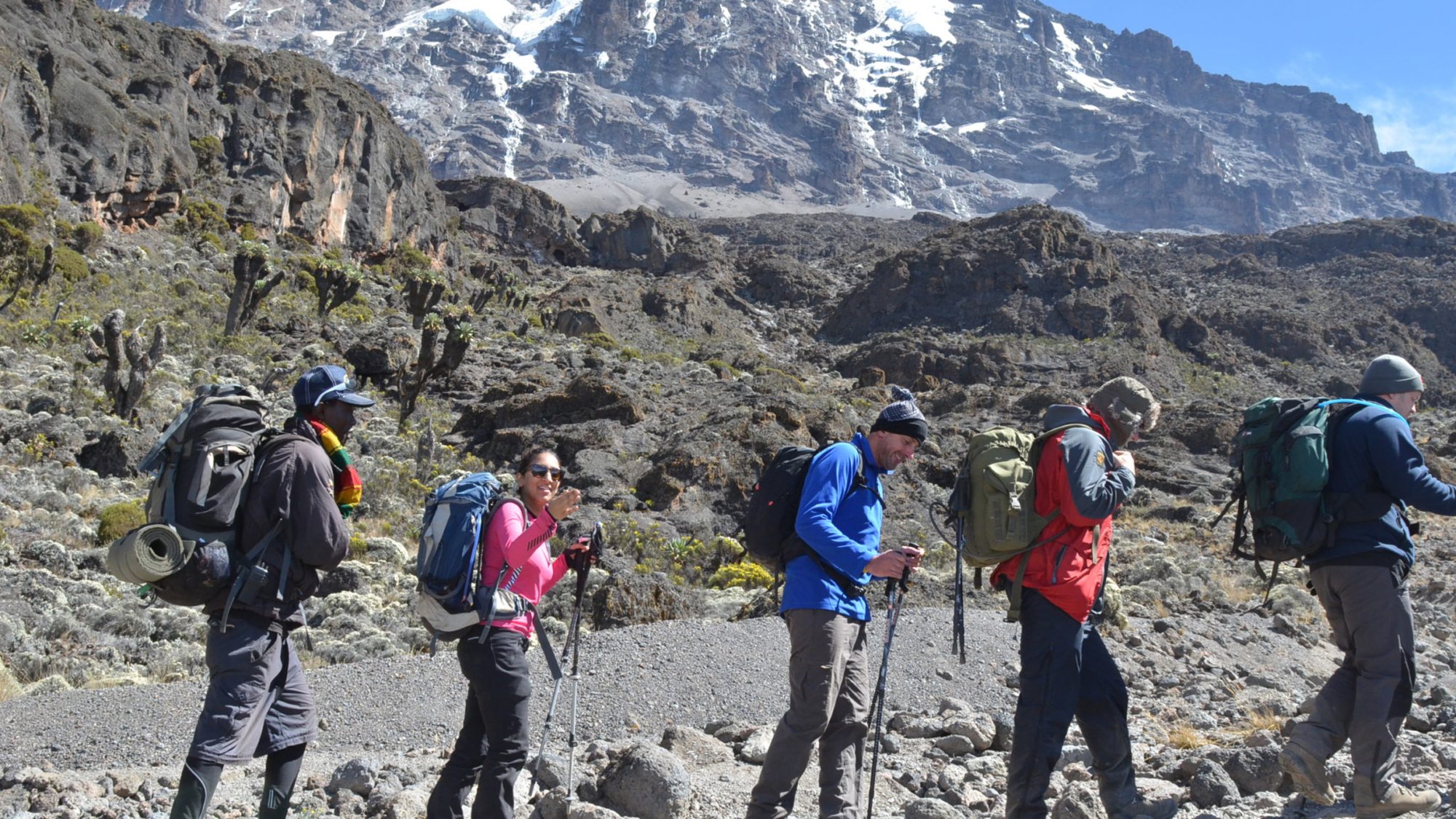
Central Kenya · 5,199m · Africa's Second Highest Peak
Mount Kenya — known to the Kikuyu people as Kirinyaga, meaning 'Mountain of Whiteness' — is Africa's second highest peak after Kilimanjaro, rising to 5,199 metres at its highest point, Batian Peak. A UNESCO World Heritage Site and Biosphere Reserve, the mountain is a national park of extraordinary ecological importance, feeding rivers that sustain millions of people across East Africa.
Unlike Kilimanjaro's single volcanic cone, Mount Kenya is an ancient eroded volcano whose original peak (estimated at 6,500m) has been carved by glaciers into a dramatic array of jagged peaks, glaciated valleys, hanging glaciers and tarns. The mountain's dramatic silhouette — twin peaks of Batian and Nelion flanking the accessible Point Lenana — is one of Africa's most recognisable shapes.
Mount Kenya offers a range of experiences from technical alpine climbing (requiring full mountaineering experience) to accessible high-altitude trekking. Point Lenana (4,985m), the third highest peak and the trekking summit, can be reached without ropes by anyone with good fitness and reasonable acclimatisation. Treks take 4–7 days depending on the route chosen — Sirimon, Naro Moru, Chogoria or Burguret.
Mount Kenya's forest and moorland zones support wildlife found nowhere else on earth. Giant lobelias and groundsels tower metres above the trekking path. Elephants move through the forest at all altitudes up to 3,800m. Colobus monkeys crash through the canopy overhead.
Mount Kenya passes through distinct vertical ecological zones: montane forest (1,800–3,000m), bamboo forest, hagenia-hypericum woodland, heathland, afroalpine moorland with giant senecios and lobelias, and finally rock and ice. Each zone supports different wildlife — elephant, buffalo, rhino and bongo in the forest; eland, hyrax and mountain reedbuck on the moorland; eagles and choughs circling the peaks.
To the Kikuyu, Mount Kenya is the dwelling place of Ngai (God). Traditional homesteads were built with their doors facing the mountain. The Meru people of the eastern slopes consider it sacred ground. This spiritual significance adds a profound dimension to any trek — the mountain is not merely a landscape but a living presence at the centre of Kenyan cultural identity.
Mount Kenya is exceptional year-round — but each season offers a different kind of experience. Here is our guide.
Best trekking conditions: dry paths, clear summit views, good photography. Peak of the short dry season. Highly recommended.
The long dry season offers excellent conditions for all routes. Most reliable summit days for Point Lenana. Very popular — book ahead.
A brief dry period before the long rains — often good conditions for a Christmas/New Year trek.
Not recommended for mountain trekking. Paths become very muddy, summit views rare, river crossings can be dangerous.
Point Lenana is achievable for any fit person with proper acclimatisation. The key is not rushing — altitude sickness claims the summit attempt of many fit visitors who ascend too quickly. Dawn Safaris recommends the 6-day route with a full acclimatisation day. Diamox (altitude medication) should be discussed with your doctor before departure.
Mountain huts are available on all main routes (basic but functional). Below the mountain, Serena Mountain Lodge and Meru Mount Kenya Safari Club offer extraordinary luxury immediately adjacent to the forest zone. All Dawn Safaris Mt Kenya itineraries include accommodation at these lodges before and after the trek.
Our personally curated selection of the finest accommodation options at Mount Kenya — from intimate tented camps to landmark luxury lodges.
All of these properties have been vetted by the Dawn Safaris team. We select accommodation based on wildlife access, guiding quality, value and the character that makes a lodge memorable. Our recommendation for your specific needs depends on your budget, travel dates and interests — contact us to discuss.
Plan My Mt Kenya Trek →All of these itineraries spend time at Mount Kenya. Click any to see the full day-by-day details.