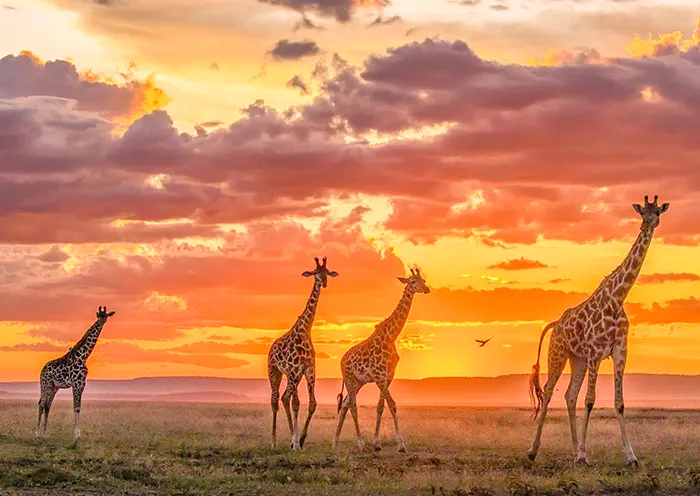
Southwest Kenya · 1,510 km² · Home of the Great Migration
The Maasai Mara is Kenya's most celebrated wildlife destination — and for good reason. Sprawling across 1,510 square kilometres of open savannah in southwestern Kenya, it forms a continuous ecosystem with Tanzania's Serengeti National Park. Together, they host the greatest wildlife show on earth.
Named after the Maasai people who have called these lands home for centuries, and the Mara River that cuts through its heart, this reserve is synonymous with the dramatic images that define Africa in the imagination: lion prides on rocky outcrops, cheetahs scanning the plains, and the thundering chaos of a wildebeest river crossing.
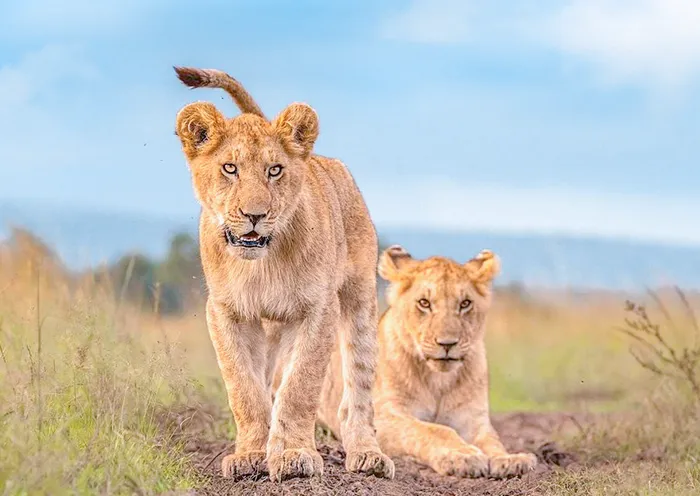
The Maasai Mara supports one of the highest densities of wildlife on earth. Here is what you can expect to see:
All five of Africa's iconic animals are present in the Mara. Lion sightings are almost guaranteed — the reserve has one of the densest lion populations in Africa. Leopards are most active around dawn and dusk. Elephants roam in large family herds. Buffalo gather in enormous herds on the plains. Black rhino, once critically endangered here, are recovering under intensive conservation efforts.
Between July and October, over 1.5 million wildebeest, accompanied by hundreds of thousands of zebra and gazelle, cross from Tanzania's Serengeti into the Mara in search of fresh grass. The dramatic Mara River crossings — where thousands of animals launch themselves into crocodile-filled waters — are one of the most extraordinary sights in the natural world.
The Mara is exceptional year-round — but each season offers a different kind of magic. Here's our honest guide to help you choose.
The migration is in full swing. Dramatic Mara River crossings happen almost daily. The dry season means vegetation is sparse, making wildlife easier to spot. Book well in advance — this is the most popular time. Expect cooler nights and warm days.
Excellent wildlife viewing. The short dry season brings good concentrations of animals around waterholes. Fewer tourists than peak season, with slightly lower prices. Warm and sunny — ideal conditions for photography.
The long rains end and the landscape is still lush and green. Wildlife concentrations are building as the dry season takes hold. An excellent shoulder season with fewer visitors and good value on accommodation.
The long rains bring the Mara alive with colour. Resident wildlife remains excellent. Spectacular for birdwatching, newborn animals, and landscape photography. Significant discounts at most camps — great value.
The Mara is served by several airstrips — Keekorok, Ol Kiombo, Musiara and Serena — with multiple daily scheduled flights from Nairobi's Wilson Airport (flight time approx. 45 minutes). Alternatively, it's a 5–6 hour road transfer through the scenic Rift Valley, often stopping at a viewpoint en route.
The Mara ecosystem offers everything from classic tented camps to ultra-luxury private conservancy lodges. Camps outside the reserve in private conservancies offer exclusive game drives with fewer vehicles. We personally vet every property we recommend.
Non-resident fees apply: approx. USD 80 per person per day for the main reserve. Private conservancy fees vary by camp and are typically included in accommodation rates. All fees are included transparently in our quoted packages.
Our personally curated selection of the finest accommodation in the Maasai Mara ecosystem — from intimate conservancy camps to benchmark luxury lodges.
All of these properties have been vetted by the Dawn Safaris team. Our recommendation for your specific needs depends on budget, travel dates and the experience you're looking for. Contact us to discuss.
Discuss Mara Accommodation →All of these itineraries spend time in the Maasai Mara. Click any to see the full day-by-day details.