Northern Kenya · 165 km² · Home of the Special Five
Samburu National Reserve lies in the rugged, arid landscape of northern Kenya, fringing the banks of the Ewaso Ng'iro River — the vital lifeline that draws wildlife from vast distances in the semi-desert terrain. It is one of Africa's most unique and dramatic reserves: where ochre soil meets blue sky, doum palms fringe the river, and the air hums with the sounds of a wilderness that feels genuinely remote.
What sets Samburu apart from all other Kenyan reserves is the presence of five extraordinary wildlife species found nowhere else in Kenya — collectively known as the Samburu Special Five: the Grevy's zebra, the reticulated giraffe, the Beisa oryx, the Somali ostrich and the gerenuk. To see even one of these in their natural habitat is extraordinary. Samburu delivers all five.
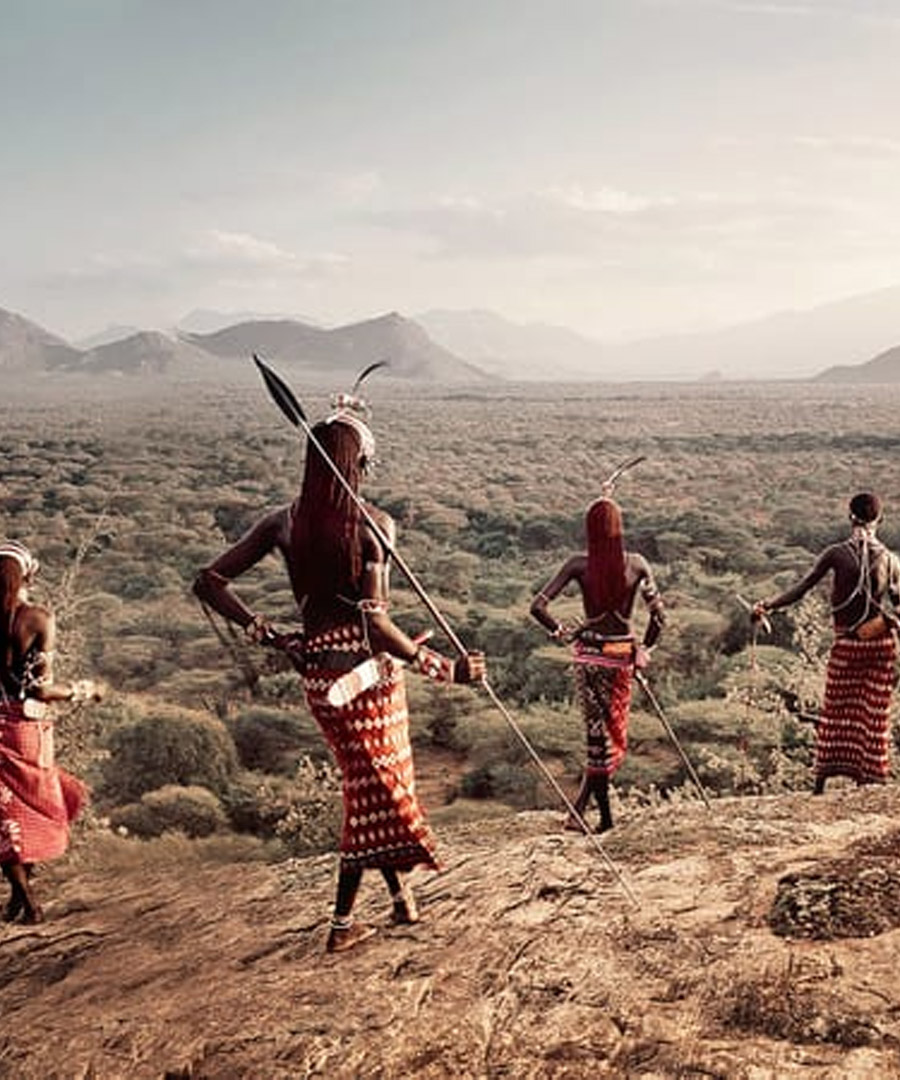
The Samburu people — semi-nomadic pastoralists closely related to the Maasai — have lived alongside the wildlife here for centuries. Their colourful beaded dress, cattle herds and traditional manyattas provide a rich cultural layer to any Samburu visit.
Samburu's arid landscape supports a unique assemblage of wildlife adapted to semi-desert conditions — including five species found nowhere else in Kenya. Wildlife concentrates along the Ewaso Ng'iro River, creating dramatic sightings against a backdrop of red soil and doum palms.
The reticulated giraffe (the most beautiful giraffe subspecies, with precisely defined white grid markings), the Grevy's zebra (the world's largest zebra, with narrow pin-stripe markings), the Beisa oryx (an imposing antelope with long straight horns), the Somali ostrich (with blue-grey neck and legs) and the gerenuk (the 'giraffe gazelle', which feeds standing upright on its hind legs). These five species are endemic to northern Kenya and the Horn of Africa.
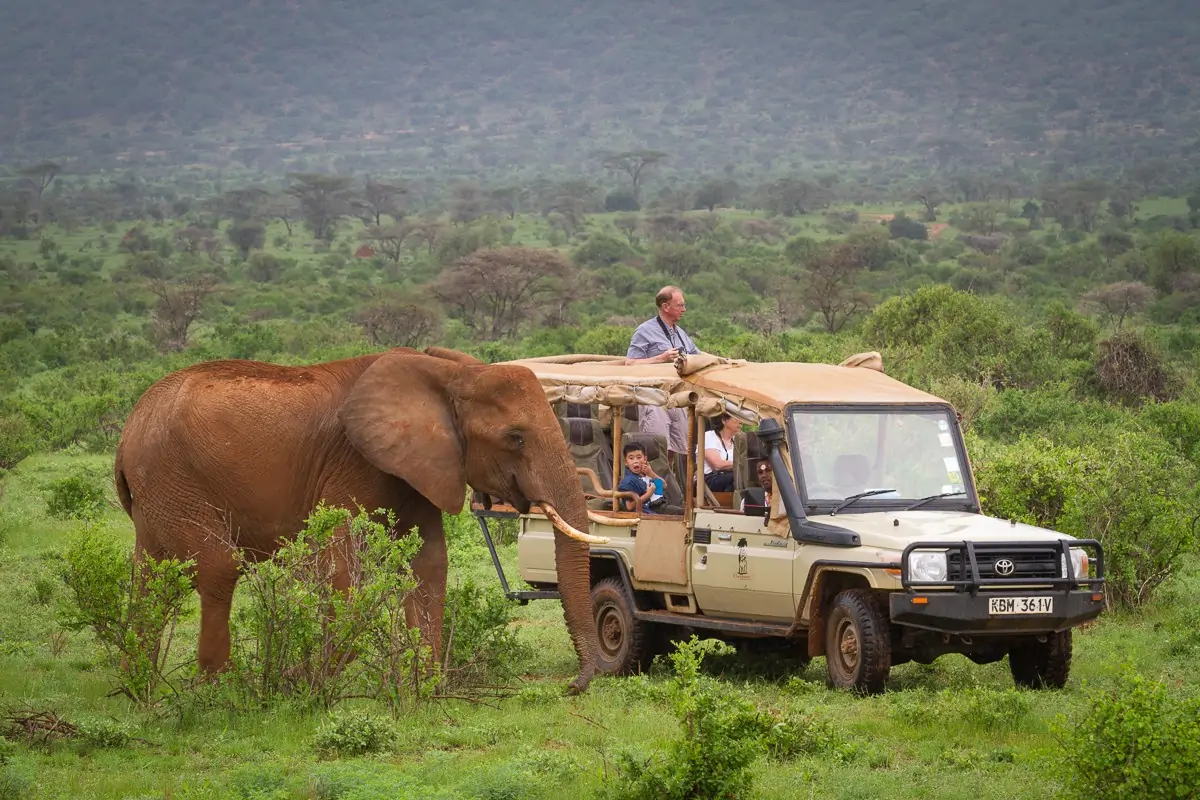
Samburu hosts substantial elephant herds that come to the Ewaso Ng'iro River daily. Lion prides are well-established and regularly sighted — one famous Samburu pride was extensively documented by Save the Elephants researchers. Leopards are regularly seen on rocky outcrops and in riverside vegetation. Crocodiles bask on the river banks.
Samburu National Reserve is exceptional year-round — but each season offers a different kind of experience. Here is our guide.
Excellent: animals congregate along the Ewaso Ng'iro River. Very hot but spectacular game viewing. Kilimanjaro visible far to the south on clear days.
Peak season with wildlife concentrated at water. Short rains may start in October but game viewing remains superb.
Green season. Roads can be difficult. Bird numbers increase dramatically with migrants arriving. Significant lodge discounts.
Short rains bring green flush. Wildlife disperses slightly but remains excellent. Christmas period is popular — book well ahead.
Samburu has its own airstrip (Samburu Airstrip) with daily scheduled flights from Nairobi Wilson Airport — approximately 40–50 minutes. Road transfer from Nairobi takes approximately 5–6 hours through Nanyuki and Isiolo. The scenery on the drive is extraordinary — Mount Kenya dominates the horizon for much of the journey.
Anti-malarial medication strongly recommended. Samburu is at lower elevation than Nairobi and significantly hotter. The Ewaso Ng'iro River level varies seasonally — crossings and activities vary accordingly. Nearest medical facilities in Nanyuki or Isiolo.
Our personally curated selection of the finest accommodation options at Samburu National Reserve — from intimate tented camps to landmark luxury lodges.
All of these properties have been vetted by the Dawn Safaris team. We select accommodation based on wildlife access, guiding quality, value and the character that makes a lodge memorable. Our recommendation for your specific needs depends on your budget, travel dates and interests — contact us to discuss.
Design My Samburu Safari →All of these itineraries spend time at Samburu National Reserve. Click any to see the full day-by-day details.