Southern Kenya · 392 km² · Elephants Under Kilimanjaro
Amboseli National Park sits in the shadow of Africa's highest peak, Mount Kilimanjaro. Though one of Kenya's smallest national parks at just 392 square kilometres, it consistently ranks among the continent's most rewarding wildlife destinations. The park's name comes from a Maasai word meaning 'salty dust', referencing the dried ancient lake bed at its heart.
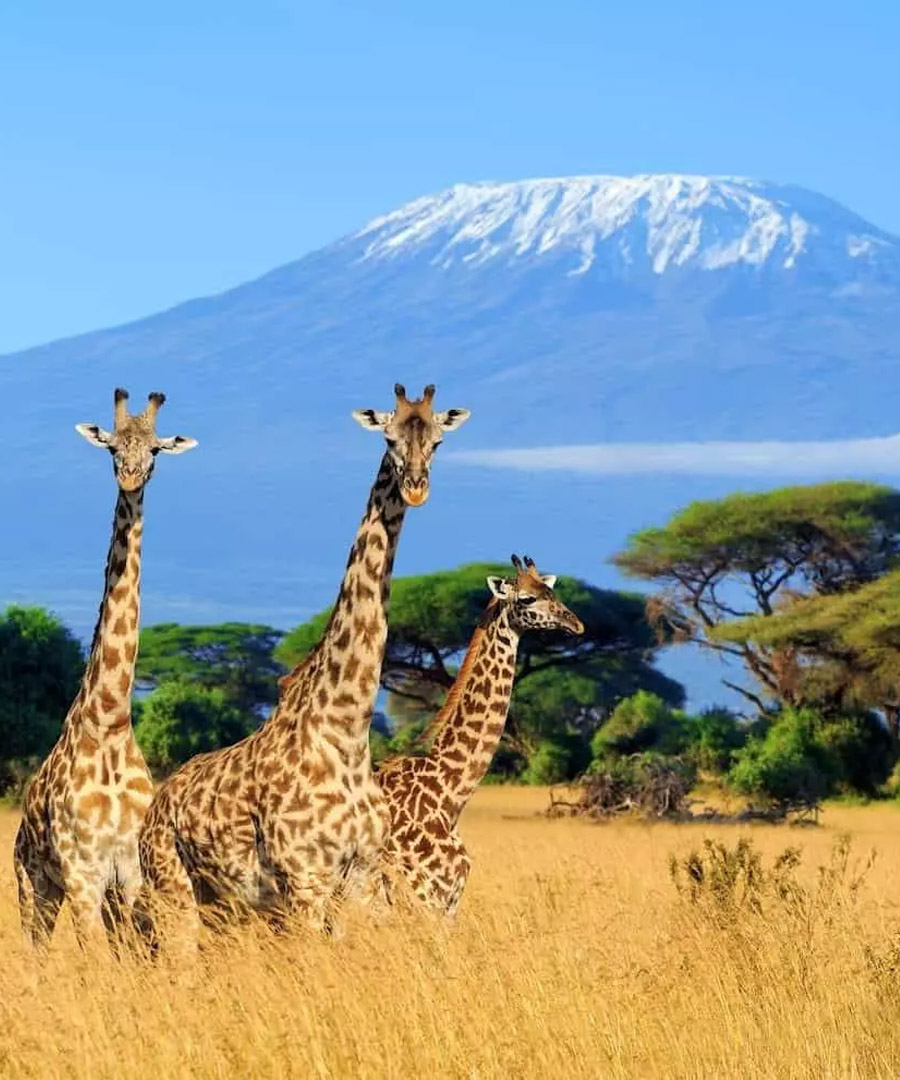
Amboseli is world-famous for its large, free-ranging elephant herds — some of the most studied elephant populations on earth. Many individuals have enormous tusks, and the sight of these gentle giants moving across the cracked earth with Kilimanjaro's snow-capped summit floating in the background is one of the defining images of African wildlife.
The park's swamp system feeds from underground springs originating on Kilimanjaro, creating a vital permanent water source that attracts remarkable concentrations of wildlife year-round. Five distinct habitats — open plains, acacia woodland, swamps, savannah and rocky thorn-bush country — each support different species.
Amboseli's combination of open landscape and permanent water creates extraordinary viewing conditions — animals are visible from great distances and wildlife concentrations are exceptional year-round.
Amboseli's elephants are arguably the best-known and most-photographed in Africa. The Amboseli Elephant Research Project, running since 1972, means many individuals are named and their family histories known. The park's open terrain allows you to observe complex elephant social behaviour — greeting ceremonies, play, feeding and family dynamics — with extraordinary clarity.
Lions are regularly sighted, particularly around the swamp areas where prey concentrates. Cheetahs benefit from the open terrain, and Amboseli has one of the better cheetah sighting rates in Kenya. Leopards are less frequently seen but are present in the acacia woodlands. Wild dogs occasionally pass through the park's buffer zones.
Amboseli National Park is exceptional year-round — but each season offers a different kind of experience. Here is our guide.
The short dry season offers excellent game viewing with animals congregating around water. Kilimanjaro is frequently clear of cloud in the early mornings. Ideal conditions for photography.
The long dry season brings wildlife into tight concentrations around the swamps. Lion and cheetah sightings peak as prey has nowhere to hide on the dry plains. Hot air balloon safaris are at their most spectacular.
The long rains green the landscape dramatically. Kilimanjaro can be cloud-covered for days at a time, but wildlife remains prolific and prices drop significantly. Outstanding for bird photography.
An excellent shoulder month — vegetation thinning out, wildlife easy to spot, still relatively quiet before peak season. Very good value.
Amboseli is served by Amboseli Airstrip with multiple daily scheduled flights from Nairobi's Wilson Airport (approximately 45 minutes). It is also a 3.5–4 hour road transfer from Nairobi via Namanga, passing through spectacular Maasai landscapes. The Namanga road crosses into Tanzania at the Namanga border post for Tanzania-connected itineraries.
Non-resident fees: approx. USD 60 per person per day. Anti-malarial medication recommended. Yellow fever certificate required from endemic countries. Nearest medical facilities in Namanga or Nairobi. Altitude of 1,220m means no altitude concerns but carry sufficient water.
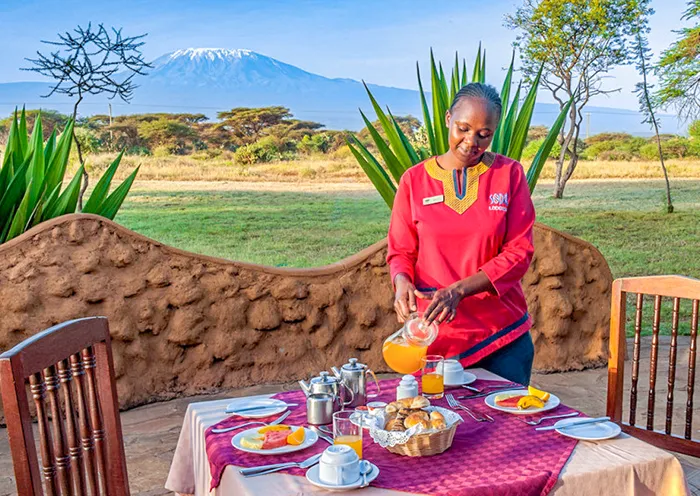
Our personally curated selection of the finest accommodation options at Amboseli National Park — from intimate tented camps to landmark luxury lodges.
All of these properties have been vetted by the Dawn Safaris team. We select accommodation based on wildlife access, guiding quality, value and the character that makes a lodge memorable. Our recommendation for your specific needs depends on your budget, travel dates and interests — contact us to discuss.
Design My Amboseli Safari →All of these itineraries spend time at Amboseli National Park. Click any to see the full day-by-day details.