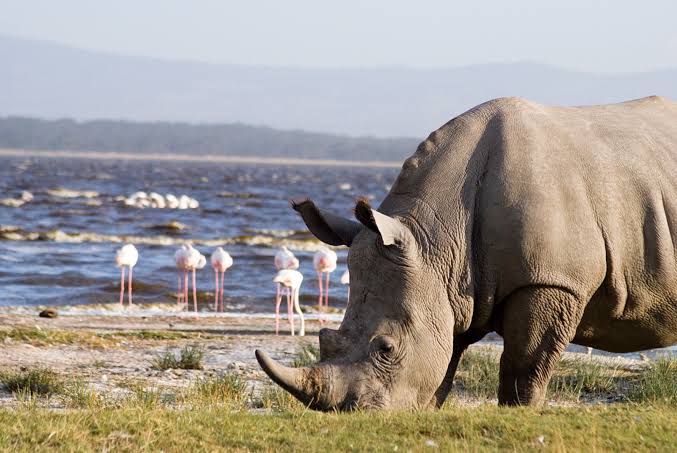
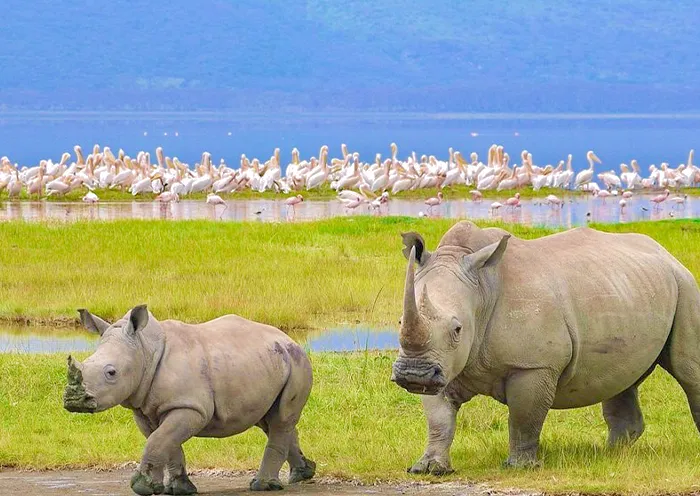
Great Rift Valley · 188 km² · Flamingos & White Rhino
Lake Nakuru National Park, in the heart of the Great Rift Valley, protects one of Kenya's most unique and visually extraordinary landscapes. The soda lake at its centre is alkaline and highly productive — at peak times, millions of lesser flamingos feed on its algae-rich shallows, turning the shoreline a vivid pink. It is one of the world's great birdwatching spectacles.
Beyond the flamingos, Lake Nakuru is Kenya's premier rhino sanctuary — both black and white rhino are resident and regularly seen. The park was one of the first in Africa to be successfully fenced to protect rhino populations from poaching, and it now holds one of the highest densities of white rhino anywhere on earth.
The park's diverse habitats include the soda lake shoreline, lush groundwater forest, open grasslands and rocky cliffs — the latter supporting a resident population of Rothschild's giraffe, one of the world's most endangered giraffe subspecies. Waterfalls, rocky viewpoints and euphorbia forests add dramatic variety to the landscape.
Nakuru's compact size and diverse habitats mean you can encounter an extraordinary range of wildlife in a single game drive. From the rhino sanctuary to the flamingo-lined shore to the forested escarpment, every habitat delivers something remarkable.
Lake Nakuru National Park is the most reliable place in Kenya to see both black and white rhino. The fenced sanctuary protects approximately 70 white rhino and a smaller number of critically endangered black rhino. White rhino — large, docile and frequently seen in open grassland — often allow remarkably close vehicle approaches. Black rhino are more elusive but regularly sighted in denser vegetation.
Lesser flamingos feed on the cyanobacteria (blue-green algae) that bloom in the highly alkaline lake water. When conditions are right, the entire shoreline can be carpeted pink with over a million birds. Numbers fluctuate with lake levels and algae availability — at other times, great white pelicans, African spoonbills and dozens of wader species line the shore.
Lake Nakuru National Park is exceptional year-round — but each season offers a different kind of experience. Here is our guide.
Dry season — excellent visibility for rhino and general game viewing. Flamingo numbers can be very high. Hot and sunny.
Best of the dry season — game concentrates around the lake. Clear skies for photography. Flamingo numbers vary but lake is active.
An excellent time to visit: dry season starting, wildlife concentrating, crowds light and prices reasonable.
Wet and lush. Birdlife spectacular with migrants arriving. Rhino still regularly seen. Significant discounts available.
Lake Nakuru is just 2 hours from Nairobi by road via the A104 highway. The drive passes through the Rift Valley escarpment with spectacular views before descending to Nakuru town. Alternatively, it's accessible by train from Nairobi (Nakuru station). Many itineraries include a Nakuru game drive en route between Nairobi and the Masai Mara or Samburu.
Park fees: approx. USD 60pp/day. The park is fully fenced — no danger of predators outside vehicles on walks within the camp area. Nakuru town itself has good facilities — supermarkets, pharmacies, and medical facilities. Altitude: 1,754m — no acclimatisation required.
Our personally curated selection of the finest accommodation options at Lake Nakuru National Park — from intimate tented camps to landmark luxury lodges.
All of these properties have been vetted by the Dawn Safaris team. We select accommodation based on wildlife access, guiding quality, value and the character that makes a lodge memorable. Our recommendation for your specific needs depends on your budget, travel dates and interests — contact us to discuss.
Design My Nakuru Safari →All of these itineraries spend time at Lake Nakuru National Park. Click any to see the full day-by-day details.